Ask for a freight quote with half the details, and you’ll get a quote that’s only half right. Carriers price a shipment based on what you tell them. Leave something out, and the price you’re quoted might not match the price you pay.
This checklist covers exactly what carriers need to give you an accurate freight quote, so there are no surprises later.
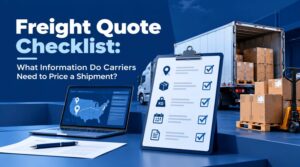
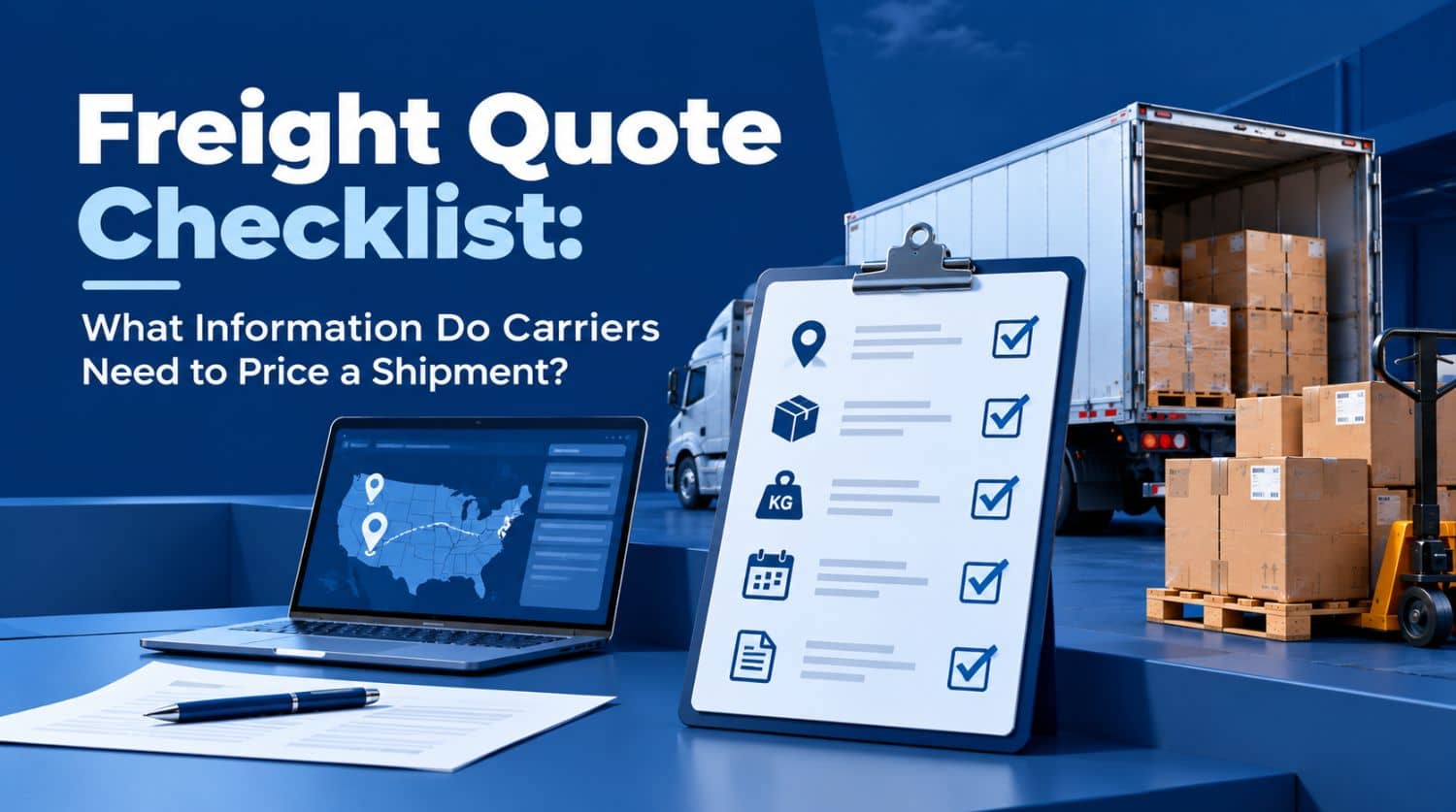
- Origin and destination, down to the ZIP code
- Pickup and delivery dates
- Weight, dimensions, and freight class
- Equipment type and any special services needed
- Whether the freight is hazardous or needs special handling
Where Your Shipment Starts and Ends
Origin and Destination
Carriers need the exact pickup and delivery zip codes, not just the city or state. Distance and lane affect price directly, so a general area isn’t enough to build an accurate quote.
Pickup and Delivery Dates
Let the carrier know when the freight will be ready and when it needs to arrive. A flexible pickup date can sometimes lower your rate. A tight deadline usually raises it.
What Carriers Need to Know About the Freight Itself
Carriers can’t price what they can’t see. The more detail you give them here, the more accurate your quote will be.
Weight
Give the total weight, not an estimate. Carriers use this number to plan space on the truck. A number that’s off by a lot can lead to a reclassified shipment and a higher bill later.
Dimensions
List the length, width, and height of each pallet or piece. Dimensions, along with weight, determine how much space your freight takes up in the trailer.
Freight Class
For LTL shipments, freight class matters a lot. Class is based on density, how easy the freight is to handle, and how likely it is to get damaged. If you don’t know your class, a good carrier can help you figure it out.
Packaging Type
Tell the carrier if your freight is palletized, crated, or loose. This affects how it gets loaded and how much room it takes up.
Equipment and Service Type
Different freight needs different trucks. Dry van works for most general freight. Reefer trailers are for anything that needs to stay cold or frozen. Flatbeds carry oversized or unusual loads that won’t fit inside a trailer.
Tell the carrier which one you need. The wrong assumption here can throw off your quote completely.
How to Know Which Equipment You Need
If your freight is boxed or palletized and doesn’t need temperature control, dry van almost always works. If it’s food, pharmaceuticals, or anything with a temperature requirement, you need a reefer. Steel, lumber, machinery, or anything too big for a standard trailer usually calls for a flatbed. When you’re not sure, describe the freight to the carrier and let them recommend the right equipment.
Let Norfleet Transportation help coordinate your freight with solutions tailored to your shipment requirements, delivery timelines, and transportation needs.
Special Handling and Extra Services
If your shipment needs a liftgate, inside delivery, or a delivery appointment, say so upfront. These are called accessorial services, and they cost extra. A quote without them isn’t a real quote; it’s just a starting point.
The same goes for hazardous materials. If any part of your shipment is regulated, tell the carrier right away. This affects both price and which carriers can even take the load.
Here’s an example. A shipper requests a quote without mentioning a delivery appointment is required. The initial quote looks great. But once the carrier learns an appointment is needed, the price goes up, and the pickup may need to be rescheduled. Naming every service upfront avoids that whole situation.
How Long Does a Freight Quote Last?
Most freight quotes are only valid for a set window, often a few days to two weeks. After that, the price can change based on fuel costs, capacity, and market demand. If you don’t book within that window, ask for a refreshed quote rather than assuming the old number still applies.
Why Getting the Details Right Matters
Accuracy isn’t optional here. Carriers set your price based only on what you tell them. If your numbers are off, your price will be off too, according to freight quote industry guidance. A quote built on guesses isn’t really a quote. It’s a placeholder that can change the moment the freight gets weighed and measured at the terminal.
Getting this right the first time also saves you time. You won’t need to go back and forth with a carrier fixing details after the fact.
Common Mistakes That Lead to Bad Quotes
A few habits cause more bad freight quotes than anything else:
- Guessing at weight instead of using an actual number
- Leaving out a needed service, like a liftgate, until pickup day
- Not knowing the freight class ahead of time
- Giving a city or state instead of a full zip code
- Forgetting to mention hazardous materials
Most shippers who fix even two or three of these see their quotes get noticeably more accurate. Standard freight quote checklists used across the industry cover nearly the same core details every time, which shows how consistent good information really needs to be.
How to Request a Freight Quote
The easiest way to get an accurate price is to gather every detail above before you reach out. Weight, dimensions, freight class, dates, and any special services. Have it all ready in one place.
From there, you can request a freight quote directly and get a price built on real numbers, not guesses. A carrier who asks good questions upfront is usually the one who gives you a price that actually holds.
Let Norfleet Transportation help coordinate your freight with solutions tailored to your shipment requirements, delivery timelines, and transportation needs.
Final Thought
A freight quote is only as good as the information behind it. Give a carrier vague or missing details, and you’re really just getting an estimate with a lot of room to change. Give them everything up front, and you get a number you can actually plan around. That small bit of prep work, done once before you ever pick up the phone, saves real time and real money on every shipment that follows.
FAQs
What information do I need to get a freight quote?
You need the origin and destination zip codes, pickup and delivery dates, weight, dimensions, freight class, and any special services like a liftgate or inside delivery.
Why did my freight quote change after pickup?
Your quote likely changed because the actual weight, dimensions, or freight class didn’t match what was declared when the quote was requested.
Do I need to know my freight class before requesting a quote?
It helps, but you don’t need to know it exactly. A good carrier can help you determine the correct freight class based on your commodity and packaging.
How far in advance should I request a freight quote?
Request a freight quote as soon as you know your shipment details, ideally a few days before you need the freight picked up, especially during busy shipping seasons.
Can I get an accurate quote without knowing exact weight and dimensions?
Not really. Estimated numbers often lead to reclassification and price changes, so measuring and weighing your shipment before requesting a quote gives you the most accurate price.
How long is a freight quote valid?
A freight quote is typically valid for a few days to two weeks, depending on the carrier, after which the price may change with fuel costs and market conditions.