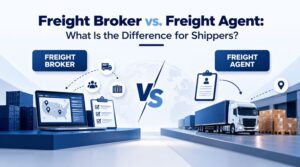
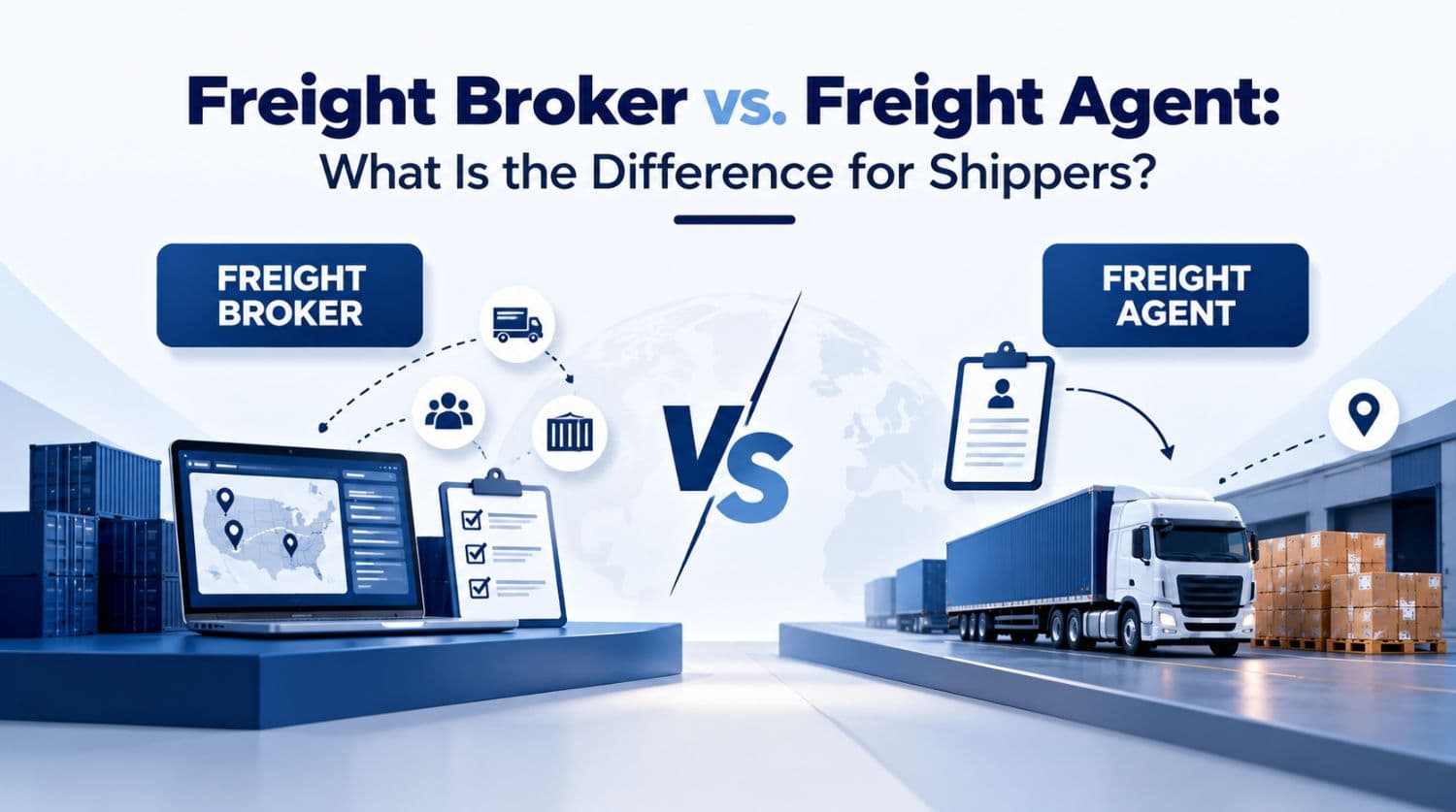
You hear both terms all the time. Freight broker. Freight agent. They sound like the same job. The freight agent vs broker question trips up a lot of shippers, and the difference matters more than you’d think.
Here’s a simple breakdown, in plain terms, so you know exactly who you’re working with.
- A freight broker holds their own FMCSA license and operates under their own authority
- A freight agent works under a broker’s license, not their own
- Brokers carry more legal responsibility for the shipment than agents do
- Agents often give you more personal, hands-on service
- Both can get your freight moved, but the setup behind each one is different
What Is a Freight Broker?
A freight broker connects shippers with carriers. They hold their own license from the Federal Motor Carrier Safety Administration, known as the FMCSA. That license means they can legally arrange freight transportation on their own. Brokers handle the full process. They find carriers, negotiate rates, manage paperwork, and track shipments. They carry a surety bond too, which protects you if something goes wrong on their end.
Most brokers work with a whole team behind them. That team might include dispatchers, carrier sales reps, and claims staff. When you call a broker, you’re really calling into that larger operation, even if one person is your main contact.
What Is a Freight Agent?
A freight agent does a lot of the same work. They find carriers. They book loads. They talk to shippers every day. But there’s one big difference. A freight agent doesn’t hold their own license. They work under a broker’s authority instead. Think of them as an independent contractor operating inside a broker’s business, according to industry comparisons of the two roles. Agents focus on sales and customer relationships. The broker they work under handles the legal and financial side.
Many agents work independently, almost like running their own small business. They build their own list of shipper customers. They just don’t carry the license or bond themselves. That part always sits with the broker.
Let Norfleet Transportation help coordinate your freight with solutions tailored to your shipment requirements, delivery timelines, and transportation needs.
Freight Broker vs. Agent: Key Differences
Here’s how the two roles stack up side by side.
| Factor | Freight Broker | Freight Agent |
| License | Own FMCSA broker license | Works under a broker’s license |
| Legal responsibility | Carries more direct liability | Limited liability, backed by the broker |
| Day-to-day role | Runs the full operation | Sales and customer service focused |
| Bond requirement | Must hold a $75,000 bond | Covered under the broker’s bond |
| Who you’re contracting with | The brokerage itself | The broker, through the agent |
Licensing and Authority
This is the core difference. A broker’s license is their own. An agent borrows the license of the broker they work for. That’s why you’ll often see agents working as part of a larger brokerage instead of running their own company.
Liability
If something goes wrong with your shipment, the broker is the one legally on the hook. An agent isn’t licensed, so they don’t carry that same direct responsibility. The broker behind them does.
Who You’re Actually Working With
When you book through an agent, your contract is still with the broker. The agent is your point of contact, but the broker’s business is what stands behind the shipment.
How to Tell Which One You’re Talking To
Sometimes it’s not obvious right away. A few quick ways to find out:
- Ask directly. A straight question gets a straight answer from anyone reputable.
- Check the company name on the bill of lading. It usually names the licensed brokerage.
- Look up the FMCSA number they give you. If it belongs to a different company name, you’re likely talking to an agent working under that brokerage.
None of this needs to feel like an investigation. Most agents are upfront about their role the moment you ask.
Advantages of Working With Each
Both roles offer real benefits, just slightly different ones.
Working with a broker directly often means:
- Access to the full resources of the brokerage, not just one contact
- A dedicated claims and operations team behind your shipment
- More visibility into how the company vets its carrier network
Working with an agent often means:
- A closer, more personal relationship with one point of contact
- An agent who knows your business and freight patterns well
- The same licensing and bond protection, just one step removed
Neither list makes one option better across the board. It comes down to what kind of relationship you want with the person booking your freight.
Does One Cost More Than the Other?
Not really, at least not in a way you’d notice. Pricing depends more on the lane, the freight, and market conditions. It usually doesn’t matter if you’re working with a broker directly or through one of their agents. Ask either one how their pricing works before you book, just like you would with any provider.
Where cost differences show up is in how a company builds its rates internally. It has little to do with whether the person quoting you is a broker or an agent. A well-run brokerage keeps pricing consistent across its whole team, agents included. You shouldn’t see a markup just because you’re talking to an agent instead of the broker directly.
Which One Should You Choose?
Honestly, it often doesn’t matter as much as people think. What matters more is the company behind either role.
A good freight agent backed by a well-run, properly licensed brokerage can give you excellent service. A broker with a poor carrier vetting process can be a worse choice than a great agent, even with the license to prove it. Judge the actual service, not just the title.
Quick tip: Ask who holds the license and bond before you book, no matter who you’re talking to. That answer tells you who’s really standing behind your shipment. Career and industry guides cover this distinction often. They point out that both roles usually work side by side inside the same company, which is exactly why the question is worth asking directly.
Let Norfleet Transportation help coordinate your freight with solutions tailored to your shipment requirements, delivery timelines, and transportation needs.
A Quick Example: Picture two shippers booking freight the same week. One works directly with a mid-size brokerage. The other works with an agent who operates under that same brokerage's license. Both shipments move through the same carrier network. Both get the same insurance backing. The only real difference is who picks up the phone when a question comes up.
Final Thought
A freight broker and a freight agent aren’t the same job, but they often work toward the same goal. The license and legal setup differ. The day-to-day experience for you as a shipper usually doesn’t differ much at all. What matters most is choosing a freight transportation company with a strong track record. It doesn’t matter much whether your main contact holds the broker license or works under one. Ask the right questions either way. You’ll know exactly who’s responsible for your freight.
FAQs
Is a freight agent the same thing as a freight broker?
No, a freight agent works under a licensed broker’s authority, while a freight broker holds their own FMCSA license and operates independently.
Who’s responsible if my shipment gets damaged when I work with an agent?
The broker the agent works under carries the legal responsibility, since the agent operates under that broker’s license and bond.
Does it cost more to work with a freight broker than a freight agent?
Not usually. Pricing depends mainly on the lane, freight type, and market conditions, not on whether you’re working with a broker or one of their agents.
Do I need to know if I’m talking to a broker or an agent?
It helps to know, mainly so you understand who legally stands behind your shipment. The freight broker vs agent split comes down to licensing, not service quality, so either one can be a great choice if the company behind them is solid.
Can a freight agent operate without a broker?
No, a freight agent must work under a licensed freight broker’s authority and cannot legally arrange freight transportation on their own.
Is a freight agent less trustworthy than a freight broker?
Not necessarily. Trustworthiness comes down to the individual and the brokerage they work under, not whether they hold a license themselves.
Do freight agents work for more than one broker at a time?
Usually not. Most freight agents work under a single broker’s authority at a time, since their license to operate comes directly from that one relationship.