Two shipments. Same size. Same weight. Different price. It happens all the time, and it’s rarely a mistake. Cargo shipping costs come from a mix of cargo shipping cost factors, not one single number.
This guide breaks down exactly what drives your freight budget, mode by mode. You can plan with real numbers instead of guesswork.
In this guide:
- Distance and Route
- Weight, Volume, and Density
- Mode of Transportation
- Fuel Surcharges
- Packaging and Freight Class
- Accessorial Services
- Market Capacity and Seasonality
- Cargo Value and Insurance
- How to Budget for Cargo Shipping Costs
- A Quick Example
- Final Thought
- FAQs
Distance and Route
Distance is the most obvious cost driver, but it’s not the whole story. Longer hauls cost more, since they use more fuel and more driver time. The actual route matters too. Freight moving through congested cities, tolls, or difficult terrain often costs more than the same mileage on an open highway. That’s according to research on freight cost factors.
Short hauls carry their own cost problem. Loading and unloading take roughly the same time no matter the distance. Spread over fewer miles, that fixed cost pushes the per-mile rate higher on short trips.
Weight, Volume, and Density
Weight matters, but so does how much space your freight actually takes up. Carriers price based on whichever is higher: actual weight or dimensional weight. That second number comes from the shipment’s length, width, and height. Detailed breakdowns of freight pricing confirm this pattern. Low-density freight, meaning it’s bulky but light, often gets billed at a higher rate than dense freight of the same weight.
Tip: Tighter packaging isn’t just about protection. Reducing wasted space in a pallet or crate can genuinely lower your rate, since it improves how efficiently your freight uses trailer space.
Let Norfleet Transportation help coordinate your freight with solutions tailored to your shipment requirements, delivery timelines, and transportation needs.
Mode of Transportation
The mode you choose has one of the biggest effects on total cost.
Full Truckload (FTL)
FTL reserves an entire trailer for your shipment. It’s priced per mile and works best for large volumes or time-sensitive freight.
Less Than Truckload (LTL)
LTL shares trailer space across multiple shippers. It’s priced by weight and freight class, and it’s usually the cheaper option for smaller shipments.
Rail and Intermodal
Rail can cost less than trucking over very long distances, though it usually takes longer and requires drayage on each end to move freight to and from the rail yard.
Typical Cost Ranges by Mode
Actual rates vary by lane, season, and carrier, but these general ranges give you a starting point for budgeting:
| Mode | Typical Shipment | General Price Range |
| LTL, short haul | Under 5,000 lbs, regional | Several hundred dollars |
| LTL, long haul | 5,000+ lbs, cross-country | Low thousands |
| Full Truckload | Full trailer, any distance | Low to mid thousands |
| Accessorials | Liftgate, inside delivery | Tens to a few hundred dollars each |
Use these as a sanity check against quotes, not a guarantee. Your actual cost depends heavily on the lane and current market conditions.
Fuel Surcharges
Fuel surcharges sit on top of the base rate and move with diesel prices. Carriers typically calculate this per mile, tied to a set baseline fuel cost written into the contract. When diesel prices rise, so does the surcharge, and it can add a meaningful percentage to your total freight bill on longer hauls.
Packaging and Freight Class
For LTL shipments, freight class plays a direct role in your final cost. Class is based on density, how easy the freight is to handle, and how likely it is to get damaged. Better packaging, tighter pallets, and accurate measurements can sometimes shift a shipment into a lower, cheaper class.
Getting this right matters more than it seems. A shipment reclassified at the terminal because the declared class didn’t match reality almost always costs more than the original quote. Measuring and describing your freight accurately before booking is one of the simplest ways to avoid that surprise.
Accessorial Services
Anything beyond a standard pickup and delivery adds to your bill. Common accessorial charges include:
- Liftgate service for locations without a loading dock
- Residential or limited-access delivery
- Inside delivery beyond the dock
- Detention pay for extended wait times
- Hazmat handling for regulated materials
None of these show up in a base quote unless you flag them ahead of time. Naming every service upfront keeps your final invoice matching what you expected.
Market Capacity and Seasonality
Freight pricing moves with supply and demand, just like any other market. When trucks are scarce and freight volume is high, rates climb. When capacity is loose, rates ease.
Certain seasons are predictably tighter. Produce season pulls capacity toward agricultural regions. The weeks before major holidays see a similar squeeze as retailers rush freight to meet demand. Planning shipments around these patterns, where your business allows it, can meaningfully lower your cost.
Cargo Value and Insurance
Higher-value freight often costs more to insure, and that cost gets built into your total shipping budget. Standard carrier liability coverage is often limited per pound, which may not fully cover high-value goods. Ask about cargo insurance options before shipping anything valuable, so you’re not caught off guard if a claim comes up.
How to Budget for Cargo Shipping Costs
A few habits make freight budgeting far more accurate:
- Get multiple quotes on your core lanes, not just one
- Weigh and measure shipments yourself before booking
- Flag every accessorial service at the time of booking, not after
- Track your actual costs against quotes over time to spot patterns
- Build in a buffer for peak season rate increases
Working with dedicated cargo transportation services that understand your freight and your lanes can also make budgeting easier, since a partner familiar with your shipping patterns can flag cost risks before they show up on an invoice.
Let Norfleet Transportation help coordinate your freight with solutions tailored to your shipment requirements, delivery timelines, and transportation needs.
A Quick Example
A mid-size retailer kept seeing unexpected charges on shipments to a specific regional warehouse. After digging in, the cause was clear. The warehouse required a delivery appointment that was never flagged at booking. Once the team started noting that requirement upfront, the surprise fees stopped. Their freight budget became far easier to predict month to month.
Final Thought
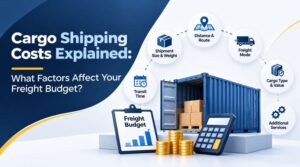
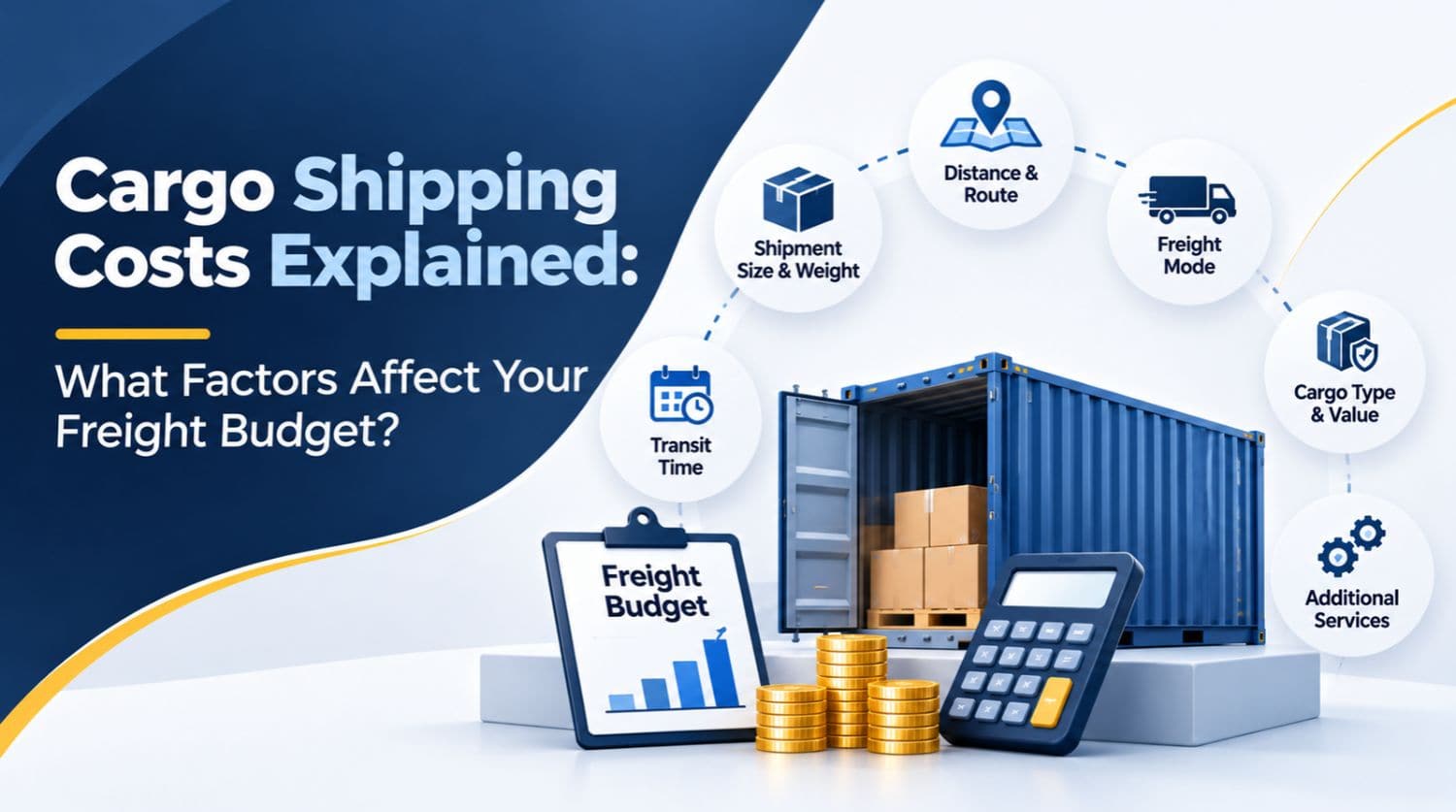
Cargo shipping costs look unpredictable from the outside, but they come down to a handful of clear factors: distance, weight, mode, fuel, and the services a shipment actually needs. Understanding how these pieces fit together turns a confusing invoice into a number you can plan for, lane by lane, season by season.
FAQs
What factors affect cargo shipping costs the most?
Distance, weight and density, mode of transportation, and fuel surcharges tend to have the biggest impact on cargo shipping costs.
Why did my freight quote change after the shipment was picked up?
Your quote likely changed because the actual weight, dimensions, or freight class didn’t match what was declared when you requested the quote.
Does packaging really affect my shipping cost?
Yes. Tighter, more efficient packaging can lower your freight class and reduce wasted trailer space, which often results in a lower shipping rate.
Is LTL always cheaper than full truckload shipping?
Not always. LTL is typically cheaper for smaller shipments. Once a shipment reaches around 10,000 to 15,000 pounds, full truckload often becomes the more cost-effective option.
Do fuel prices really change my freight cost that much?
Yes. Fuel surcharges are added on top of the base rate and adjust with diesel prices, so a long-haul shipment can see a meaningful cost swing when fuel prices move.
How can I lower my cargo shipping costs?
You can lower costs by getting multiple quotes, packaging freight efficiently, flagging accessorial needs upfront, and planning shipments around seasonal capacity patterns.