LTL Shipping for U.S. Businesses and Partial Loads
Not every commercial shipment requires an entire trailer. When freight occupies only part of a trailer and does not require dedicated capacity, LTL shipping can provide a practical transportation option for businesses moving smaller quantities of commercial freight.
Norfleet Transportation helps U.S. businesses coordinate partial-load shipments based on freight characteristics, pickup and delivery requirements, and scheduling needs. From a few pallets of inventory to recurring shipments between business locations, the appropriate transportation method depends on the size, handling requirements, and destination of the freight.
When LTL Shipping Makes Sense
The right transportation method depends on more than shipment size. Businesses should consider freight weight, dimensions, handling requirements, delivery schedule, and whether the shipment requires exclusive trailer capacity.
Less-than-truckload shipping may be appropriate for:
Palletized commercial freight
Inventory replenishment
Manufacturing components
Retail merchandise
Distribution center shipments
Business-to-business deliveries
Smaller recurring freight movements
Sharing trailer capacity can make sense when a shipment does not require a dedicated trailer. Businesses should still evaluate the shipment’s specific requirements before selecting a transportation method.
How Partial-Load Transportation Works
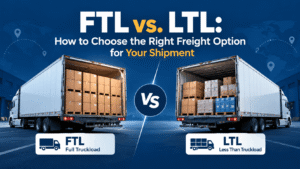
Unlike dedicated truckload transportation, LTL transportation combines freight from multiple shippers within a shared carrier network. Shipments are organized according to factors such as destination, route, freight class, dimensions, weight, and handling requirements.
An LTL shipment may pass through one or more terminals before reaching its final destination. Because freight can be handled at different points throughout the network, accurate shipment information and appropriate packaging are important parts of the planning process.
Before transportation is arranged, businesses should provide details such as pallet count, dimensions, weight, freight classification when available, pickup location, delivery destination, and any special handling requirements.
Freight Commonly Moved Through LTL Networks
LTL freight is commonly used for commercial shipments that are too large for parcel services but do not require an entire trailer. This makes it useful for businesses that need to move smaller quantities without reserving dedicated trailer capacity.
Common examples include:
Packaged commercial goods
Manufacturing parts
Retail inventory
Replacement products
Palletized supplies
Distribution shipments
Business-to-business orders
Warehouse replenishment
The suitability of LTL depends on the shipment rather than simply the number of pallets. Freight characteristics, delivery requirements, packaging, and handling considerations should all be reviewed before transportation is scheduled.
Preparing Freight for the LTL Network
Preparation is important When freight moves through a shared transportation network, businesses should ensure products are properly palletized, secured, and clearly labeled before pickup. For shipments with unusually short delivery requirements, expedited freight services may also be worth considering.
Accurate shipment information is also important. Businesses should confirm pallet count, dimensions, weight, freight classification when known, and any special handling requirements before transportation is arranged.
Providing complete information and properly prepared freight helps transportation providers coordinate routing and handling more effectively while reducing avoidable issues during the shipping process.
Selecting an LTL Carrier for Your Business
Choosing an LTL carrier should involve more than comparing quoted transportation costs. Businesses should consider how the provider handles shipment information, communicates requirements, and coordinates freight through the transportation process.
Norfleet Transportation works with U.S. businesses to coordinate freight based on individual shipment requirements. For organizations that move different types and sizes of freight, using multiple transportation methods can provide greater flexibility. Businesses can also review Transportation Services when evaluating different options for their broader shipping needs.
Find the Right Solution for Your Partial Shipment
If your freight does not require an entire trailer, Norfleet Transportation can help you evaluate whether LTL transportation is appropriate for the shipment. Providing accurate freight details gives the transportation team a better understanding of your requirements before transportation is arranged.
Share your commodity, pallet count, dimensions, weight, pickup and delivery locations, and preferred schedule when requesting assistance. If the shipment requires dedicated trailer capacity instead, Full Truckload (FTL) Freight Services may be a more appropriate option.
LTL is generally considered when a commercial shipment occupies only part of a trailer and does not require exclusive transportation. Pallet count, dimensions, weight, freight classification, handling requirements, and delivery needs should all be considered before selecting LTL.
Why does freight class matter for an LTL shipment?
Freight classification is used within the LTL industry to categorize shipments based on characteristics such as density, handling, stowability, and liability. Providing accurate freight information helps the carrier evaluate and price the shipment appropriately.
What happens to LTL freight while it is in transit?
Unlike dedicated truckload freight, an LTL shipment can move through a network of terminals and transportation points before reaching its destination. The exact movement depends on the carrier network, origin, destination, and shipment requirements. For freight that requires a specific delivery timeframe, businesses may also evaluate time-critical shipping based on their scheduling needs.
What should I do if I don't know my freight class?
Provide the carrier or transportation provider with accurate information about the commodity, dimensions, weight, packaging, and pallet configuration. These details can help determine the appropriate classification or identify what additional information is needed.
Can LTL be used for recurring business shipments?
Yes. Businesses can use LTL for recurring shipments when individual loads do not require dedicated trailer capacity. Regular shipments can include inventory replenishment, manufacturing components, retail products, and distribution orders.
Thank You!
Thanks for the submission. We will get back to you right away!