Picking the wrong freight broker can cost you more than money. It can cost you a missed deadline, a damaged shipment, or a customer who never orders again. The right one, on the other hand, becomes a real partner in keeping your freight moving.
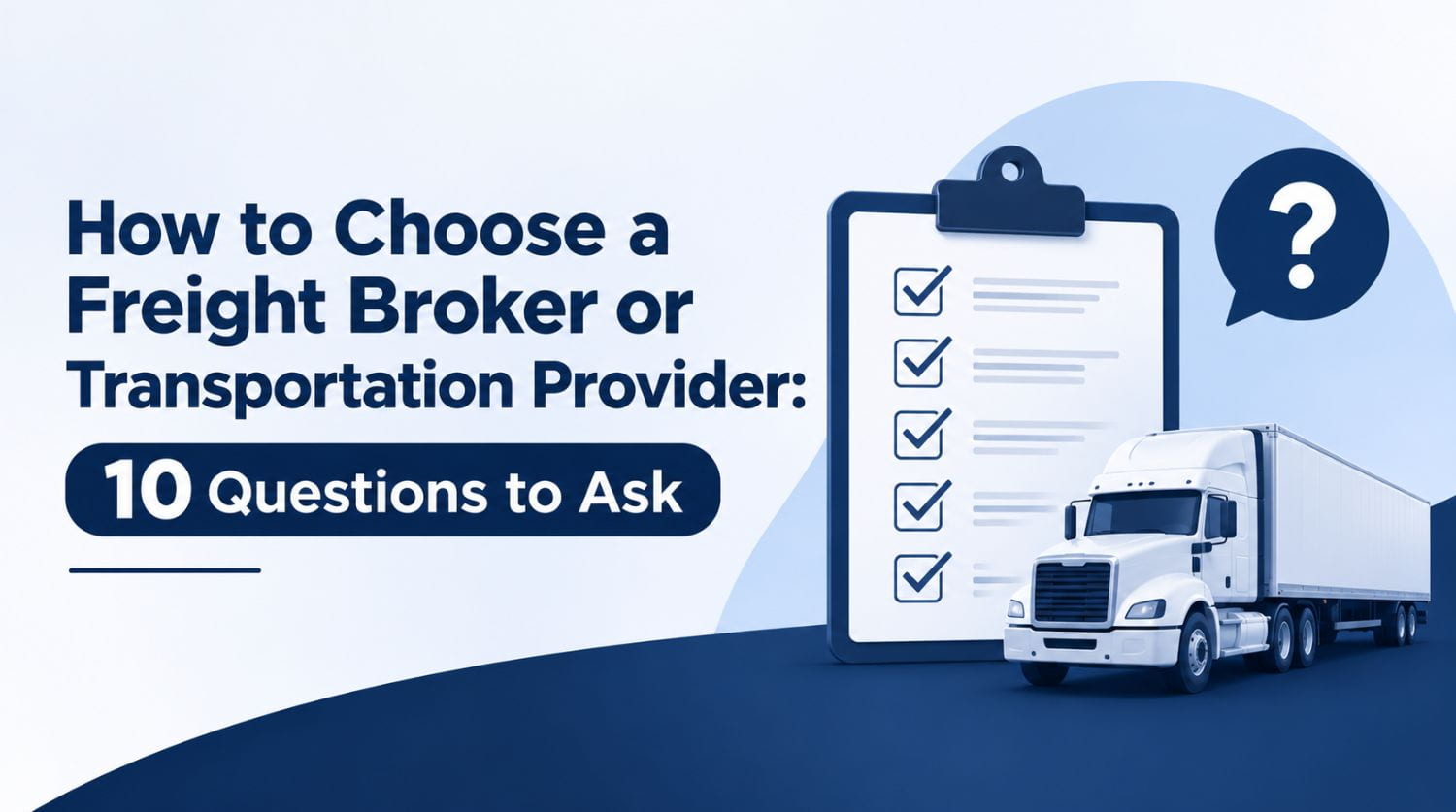
The problem is, most brokers sound the same on a sales call. The way to tell them apart is to ask the right questions. Here are 10 that matter most.
- Confirm the broker is licensed, bonded, and properly authorized
- Ask how long they’ve been in business and what freight they specialize in
- Find out how they vet the carriers they use
- Get clear on pricing, fees, and how claims get handled
- Ask how you’ll communicate and track your shipments day to day
Questions About Licensing and Legitimacy
Before anything else, make sure the broker is who they say they are.
1. Are You Licensed and Bonded?
Every legitimate freight broker in the U.S. must hold a federal property broker license from the Federal Motor Carrier Safety Administration (FMCSA). They also need a surety bond of at least $75,000. This bond protects you if the broker fails to pay a carrier or handles your freight badly. Industry guidance on selecting a broker makes this the very first thing to check, and for good reason. You can look up a broker’s license and bond status yourself on the FMCSA’s website in a few minutes. If they hesitate to share this information, treat that as a serious red flag rather than an oversight.
2. How Do You Vet Your Carriers?
A broker is only as good as the carriers they hire. Ask how they check a carrier’s operating authority, safety rating, and insurance before booking a load. A good broker verifies this every time, not just once. If they can’t explain their process clearly, that’s a warning sign. Ask specifically whether they re-check safety ratings on an ongoing basis, not only when a carrier first joins their network. Carrier conditions change, and a broker who monitors that stays ahead of problems instead of reacting to them.
Let Norfleet Transportation help coordinate your freight with solutions tailored to your shipment requirements, delivery timelines, and transportation needs.
Questions About Experience and Capabilities
Licensing tells you a broker is legal. Experience tells you they’re good at the job.
3. How Long Have You Been in Business?
A broker with several years in the industry has likely built strong carrier relationships and knows how to solve problems when they come up. That doesn’t mean a newer broker is automatically bad, but it’s worth asking how they’ve handled tough situations so far. A specific example, like a missed pickup they recovered from, tells you far more than a general answer about their years in business.
4. What Types of Freight and Equipment Do You Handle?
Some brokers specialize in dry van freight. Others handle reefer, flatbed, or a mix of everything. Make sure their experience actually matches what you ship. A broker who mostly moves dry goods may not be the right fit for temperature-sensitive freight. Ask how much of their volume runs through your specific freight type. A broker who moves it every day will spot problems faster than one handling it occasionally.
Questions About Performance and Reliability
This is where you find out how a broker actually performs, not just what they claim.
5. What’s Your On-Time Delivery Rate?
Ask for a real number, not a vague answer. A broker who tracks and shares this metric is usually one who takes performance seriously. If they can’t give you a number at all, that tells you something too. Ask how that number is measured as well, since “on time” can mean different things to different brokers.
6. How Do You Handle Claims?
Freight gets damaged sometimes, even with a great broker. What matters is what happens next. Ask how claims are filed, how long they typically take to resolve, and who you’ll be in contact with if something goes wrong. A broker who walks you through this process clearly, before you ever need it, is one worth trusting with your freight.
Questions About Pricing and Transparency
A low quote today can turn into a high invoice later if pricing isn’t clear from the start.
7. How Is Pricing Structured?
Ask whether you’re getting a flat rate, a rate based on current market conditions, or something in between. Understanding how the number was built helps you compare quotes from different brokers fairly. A broker who explains this clearly, rather than just handing you a total, is confident the number is fair.
8. Are There Any Hidden Fees?
Ask directly about accessorial charges, fuel surcharges, and anything else that might show up on the final bill. A broker who’s upfront about these costs from the start is one you can trust with the next quote too. Get this in writing when possible, so there’s no ambiguity if a question comes up after the invoice arrives.
Questions About Communication and Support
Even the best broker isn’t much help if you can’t reach them when something comes up.
9. How Will We Communicate and Track Shipments?
Find out if you’ll get regular updates, access to a tracking portal, or a single point of contact for questions. A broker who’s hard to reach during a normal week will be even harder to reach during a problem. Ask what happens outside normal business hours too, since freight issues don’t always wait for the next morning.
10. Can You Provide References?
A broker confident in their service should have no problem connecting you with a current customer. Talking to someone who’s actually used them tells you more than any sales pitch will. If a broker can only offer references from years ago, ask why nothing more recent is available.
Broker vs. Asset-Based Carrier: Does It Matter?
Some transportation providers are brokers, meaning they arrange freight through a network of carriers. Others are asset-based, meaning they own their own trucks and drivers. Neither one is automatically better, but the difference matters for how much visibility and control you get.
An asset-based provider often gives you more direct communication with the people actually moving your freight. A broker gives you access to more capacity and more flexibility across regions and equipment types. Some companies do both, brokering loads when it makes sense and using their own trucks the rest of the time. Ask which model a provider uses, and how that shapes what you can expect on your shipments.
Red Flags to Watch For
A few warning signs should make you pause before signing on with a broker:
- They can’t produce proof of FMCSA licensing or bonding when asked
- They’re vague or evasive about how they vet carriers
- They pressure you to book quickly without answering your questions
- They can’t explain their pricing in plain terms
- Past customers report chronic late deliveries or unresolved claims
Careful carrier vetting isn’t optional for a broker. Freight broker best practices point out that a broker who skips this step is putting your freight, and your business, at real risk.
How to Compare Multiple Brokers Fairly
Once you’ve asked these questions to a few different providers, compare the answers side by side rather than relying on memory. Write down each broker’s licensing status, on-time rate, pricing structure, and communication process in one place. Patterns tend to show up quickly this way. One broker might be strong on price but vague on claims handling. Another might be more expensive but far more transparent about how they vet carriers. Seeing the answers together, instead of judging each broker in isolation, makes the tradeoffs much easier to weigh.
Why the Right Provider Makes a Real Difference
A good broker or transportation provider does more than move freight from one place to another. They catch problems before they become expensive ones, communicate clearly when something changes, and treat your shipment like it matters. Working with dedicated transportation and logistics services that answer these 10 questions well tends to mean fewer surprises down the road. It’s not just about a lower quote upfront.
This matters even more as your shipping volume grows. A single missed pickup or a slow claims process might be a minor annoyance when you ship once a month. It becomes a real operational risk when freight is moving every week, and a bad partner starts costing you time on every single load.
Let Norfleet Transportation help coordinate your freight with solutions tailored to your shipment requirements, delivery timelines, and transportation needs.
Final Thought
Choosing a freight broker isn’t just about finding the lowest price. It’s about finding a provider who’s licensed, experienced, transparent, and easy to reach when you need them. Ask these 10 questions before you commit, and you’ll know a lot more than you would from a sales call alone. The extra 15 minutes spent asking now can save you weeks of frustration later. It’s the clearest way to separate a broker who talks a good game from one who actually delivers.
FAQs
What questions should I ask before hiring a freight broker?
Ask about their FMCSA licensing and bonding, how they vet carriers, their on-time delivery rate, how pricing works, and how you’ll communicate throughout the shipment.
How do I know if a freight broker is legitimate?
You can check a freight broker’s license and bond status directly on the FMCSA’s website, which confirms whether they’re properly authorized to arrange freight transportation.
Why does it matter how a broker vets their carriers?
It matters because a broker who doesn’t verify a carrier’s authority, safety rating, and insurance is putting your freight at higher risk of damage, delay, or liability issues.
Is a cheaper freight broker always a worse choice?
Not necessarily. Price alone doesn’t tell you much. A lower quote can still come from a reliable broker, but it’s worth confirming their licensing, claims process, and communication before deciding based on cost.
How can I check a freight broker’s on-time delivery performance?
Ask the broker directly for their on-time delivery rate, and consider asking for references so you can hear about real performance from a current customer.
What’s the difference between a freight broker and an asset-based carrier?
A freight broker arranges transportation through a network of carriers, while an asset-based carrier owns and operates its own trucks, which can mean more direct communication about your specific shipment.