The question comes up almost every week from shippers who’ve outgrown parcel carriers but aren’t ready to book a full trailer: what’s LTL freight, exactly, and is it actually the right fit for what I’m moving? It’s a fair question, since the term gets thrown around constantly in logistics conversations without much explanation of what’s actually happening behind it.
Here’s a straightforward answer, plus what to know before your first LTL shipment goes out the door.
- LTL stands for less-than-truckload shipping, a method that lets multiple shippers share space in one trailer
- Shipments typically range from 150 to 15,000 pounds, too big for parcel carriers and too small to justify a full truck
- Freight moves through a hub-and-spoke network of terminals rather than directly from origin to destination
- Pricing is based on weight, freight class, and distance, not a flat per-package rate
- It’s the standard choice for manufacturers, wholesalers, and retailers shipping palletized freight regularly
What Is LTL Freight?
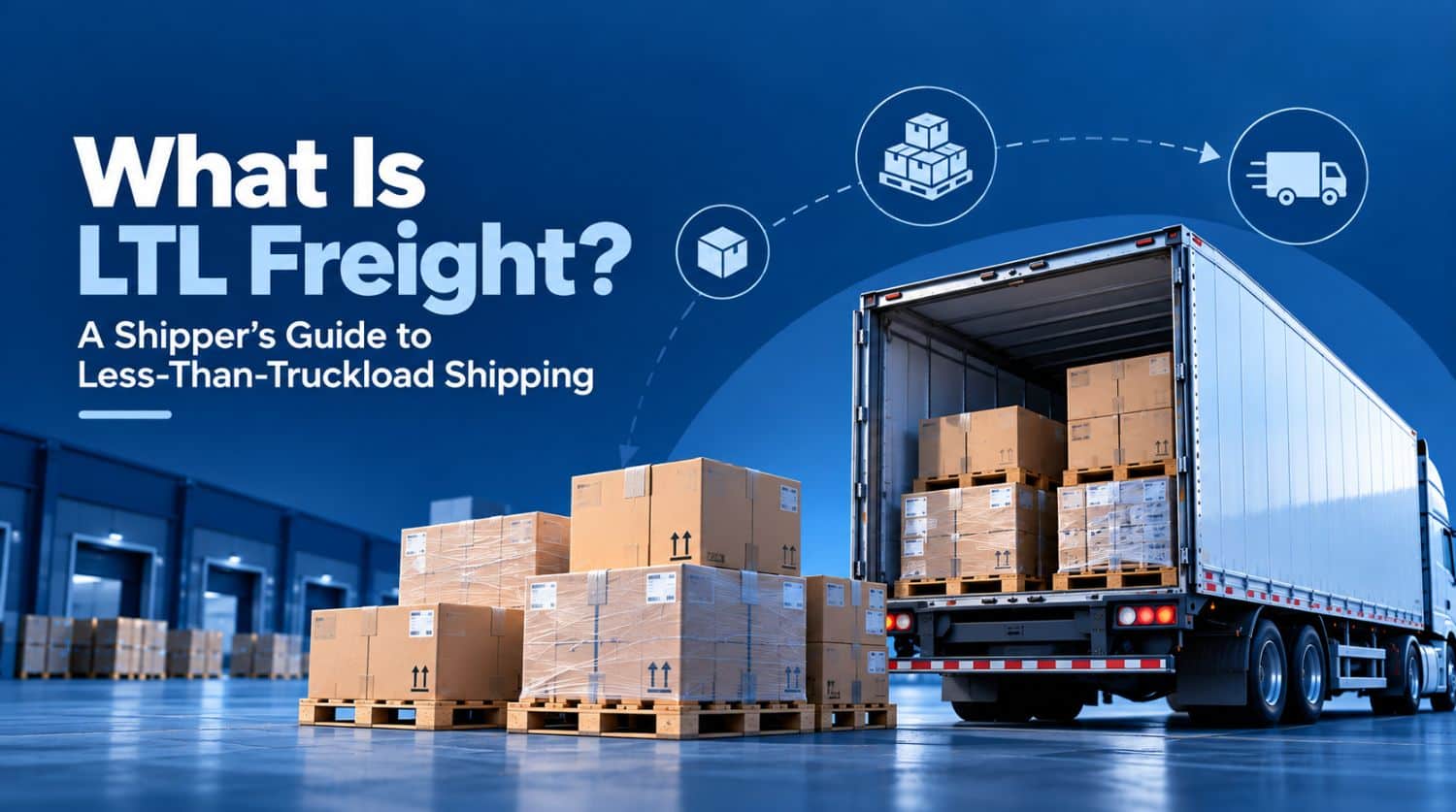
LTL freight, short for less-than-truckload freight, is a shipping method where a single shipment doesn’t require an entire trailer, so it shares space with freight from other shippers headed in a similar direction. Instead of one company paying for the full 48- or 53-foot trailer, each shipper pays only for the portion of the truck their freight actually occupies.
That’s the core of what LTL transportation means in practice: shared capacity, shared cost, and a shipping method built specifically for the freight that falls between a parcel box and a full truckload. Some shippers know it by its full name, less-than-truckload shipping, while others just call it LTL, but the mechanics behind both terms are identical.
How LTL Differs From FTL and Parcel Shipping
Parcel carriers handle individual packages, generally under 150 pounds, moved through a network built for speed on small items. Full truckload (FTL) shipping sits at the other end, where one shipper reserves an entire trailer, and the truck moves directly from pickup to delivery with no stops in between. LTL freight shipping fills the middle ground: too much volume or weight for parcel, not enough to justify paying for a whole trailer.
How LTL Freight Shipping Works
Understanding the mechanics is what makes LTL pricing and transit times make sense. Every LTL shipment moves through a multi-step network rather than traveling in a straight line.
Pickup and Consolidation
A local driver collects the shipment from the shipper’s dock and brings it to the carrier’s nearest terminal. At the terminal, freight from many different shippers gets sorted and consolidated based on where it’s headed next.
Linehaul and Sorting
Consolidated freight is loaded onto a linehaul trailer alongside shipments bound for the same region and transported to a destination terminal, sometimes with a stop at an intermediate hub along the way. According to standard logistics glossary definitions, this hub-and-spoke sequence- pickup, consolidation, sorting, linehaul, and deconsolidation- is what distinguishes LTL from more direct freight methods.
Final-Mile Delivery
At the destination terminal, freight is broken back down by delivery route and loaded onto local trucks for final delivery to the consignee. Each of these handoffs adds a small amount of time to the total transit, which is why LTL shipments generally take longer than a comparable FTL move covering the same distance.
What Determines LTL Freight Costs
Pricing isn’t a flat per-pound rate. Carriers weigh the shipment, assign a freight class based on density and handling requirements, factor in the distance and lane, and add any accessorial services like liftgate or residential delivery. Two shipments of identical weight can carry very different price tags depending on how much trailer space they occupy and how far they’re traveling.
Fuel surcharges and market conditions add another layer on top of the base calculation, which is why the same shipment can quote differently week to week even when nothing about the freight itself has changed. Shippers who ship LTL regularly typically get the most predictable pricing by working with a carrier that offers negotiated rates rather than relying on standard published tariffs for every shipment.
Types of LTL Freight Service
Not all LTL service moves at the same speed or price point. Choosing the right service level matters as much as choosing LTL in the first place.
Standard LTL
Standard LTL is the default service level most shippers use, moving freight through the regular hub-and-spoke network on the carrier’s normal transit schedule. It offers the best balance of cost and reliability for freight without a hard delivery deadline.
Guaranteed or Expedited LTL
For time-sensitive shipments, most carriers offer a guaranteed or expedited service tier at a premium price, prioritizing the freight through terminals and committing to a specific delivery date or time window.
Volume LTL
Volume LTL sits between standard LTL and full truckload, designed for shippers whose freight is approaching truckload size (often 6 or more pallets) without quite justifying a dedicated trailer. It’s typically priced differently than standard LTL and can offer meaningful savings for freight in that in-between range.
Let Norfleet Transportation help coordinate your freight with solutions tailored to your shipment requirements, delivery timelines, and transportation needs.
Who Uses LTL Freight Shipping
LTL freight shipping is built for businesses that move regular volumes of palletized freight without filling a trailer on every shipment.
Small and Mid-Size Manufacturers
Manufacturers shipping finished goods to distributors or retail partners in quantities smaller than a full truckload rely on LTL to keep freight moving without paying for unused trailer space.
Ecommerce and Retail Distributors
Retailers replenishing regional warehouses or fulfillment centers often ship in the exact weight range LTL is built for, especially when order volumes fluctuate week to week.
Wholesalers and Distributors
Wholesalers moving product to multiple smaller accounts frequently combine several orders into one LTL shipment, spreading the cost across destinations that wouldn’t individually justify a dedicated truck. Shippers in this range commonly save 20 to 30 percent compared to booking a full truckload they don’t need, according to industry freight cost analysis, which is a meaningful margin for businesses shipping several times a week.
Benefits of LTL Freight Shipping
The clearest benefit is cost. Paying only for the trailer space a shipment actually uses is far more efficient than booking a full truck for a half-full load. LTL also gives smaller and mid-size businesses access to reliable, scheduled freight service without the volume commitments that full truckload shipping often requires, and consolidated networks mean more frequent pickup availability across most regions.
Limitations to Keep in Mind
The trade-offs are transit time and handling. Freight moving through multiple terminals takes longer than a direct FTL move and gets physically handled more times along the way, which raises the risk of damage for fragile items. Freight classification also adds a layer of complexity that FTL shipping doesn’t have, and getting it wrong can mean a reclassification fee after pickup. Shippers moving high-value or delicate goods should weigh that added handling risk against the cost savings before defaulting to LTL out of habit.
A Real-World Example
A regional bakery equipment supplier was shipping single-pallet orders to independent bakeries across three states, each order too small to reasonably justify a dedicated truck. Before switching to LTL, the company was either overpaying for near-empty trailers or delaying shipments to batch them together. Moving to scheduled less-than-truckload freight shipping let them ship each order as it was ready, without waiting to fill a truck or absorbing the cost of one that wasn’t full.
Let Norfleet Transportation help coordinate your freight with solutions tailored to your shipment requirements, delivery timelines, and transportation needs.
Final Thought
LTL freight shipping exists for the exact gap most growing businesses eventually hit: shipments too large for parcel, too small for a dedicated truck. Understanding how the network moves, what drives the cost, and which service level fits the shipment makes it far easier to use LTL well instead of defaulting to it out of habit.
FAQs
What’s LTL freight used for?
LTL freight is used for shipments generally between 150 and 15,000 pounds, typically palletized goods that don’t require a full trailer but are too large or heavy for parcel carriers.
What does LTL transportation mean compared to FTL?
LTL means multiple shippers share space in one trailer and freight moves through terminal hubs, while FTL means one shipper reserves the entire trailer for a direct, point-to-point move.
How long does LTL freight shipping typically take?
Transit time varies by distance and network, but LTL shipments generally take one to five days longer than a comparable full truckload shipment because of the additional terminal handling involved.
Does LTL freight cost less than full truckload shipping?
For smaller shipments, yes. LTL is typically the more affordable option below roughly 10,000 to 15,000 pounds, since shippers pay only for the space they use rather than the full trailer.
Is LTL freight a good fit for fragile items?
LTL can work for fragile items, but the multiple terminal handoffs involved mean there’s more handling than FTL shipping, so proper packaging and, for high-value or delicate freight, FTL is sometimes the safer choice.
What’s the difference between standard and volume LTL?
Standard LTL covers typical shipments moved through the regular terminal network, while volume LTL is priced differently for larger shipments, often six or more pallets, that approach truckload size without quite filling a full trailer.