Freight that moves well doesn’t happen by accident. It happens because someone built a plan first. Without one, you’re reacting to problems instead of preventing them, and every shipment becomes its own small emergency.
This guide walks through how to build a real transportation management plan, step by step, using a checklist you can actually put to work.
- A transportation management plan defines your goals, carriers, routes, and how you’ll measure performance
- Start by reviewing your current shipping data before you plan anything new
- Set specific KPIs, not vague goals like “ship faster”
- Choose carriers and modes based on your actual freight, not habit
- Build in a regular review cycle, since a plan that never gets revisited goes stale fast
What Is a Transportation Management Plan?
A transportation management plan is a written strategy for how your freight moves. It covers which carriers you use, which modes fit which shipments, how you track performance, and how you handle problems when they come up. Think of it as the rulebook your team follows instead of making decisions case by case.
Without a plan, most shippers end up making freight decisions on the fly. That works fine until volume grows or something goes wrong. A solid plan, built once and reviewed regularly, turns freight into something you manage instead of something that manages you. Many businesses build this plan alongside a transportation management services provider. A partner with existing systems and carrier relationships can help set realistic goals from day one.
Why Your Business Needs One
A plan does more than keep things organized. It gives you a way to control costs, catch problems early, and make decisions based on data instead of gut feeling. Businesses with a documented plan tend to spot rising costs or slipping performance months before a business without one even notices the trend.
Working with a transportation management team from the start can also shortcut a lot of the guesswork. They’ve already seen what works across other shippers moving similar freight.
Let Norfleet Transportation help coordinate your freight with solutions tailored to your shipment requirements, delivery timelines, and transportation needs.
Step 1: Assess Your Current Freight Network
You can’t plan for freight you don’t understand. Before setting any new goals, take a close look at what’s actually happening today.
Analyze Historical Shipping Data
Pull at least six months of shipping data. Look at volume by lane, cost per shipment, on-time performance, and how often accessorial fees show up. Patterns you didn’t notice week to week often become obvious once you see the full picture at once.
Map Your Lanes and Volume
List out your most frequent shipping lanes and how much volume moves on each one. High-volume lanes are usually where the biggest savings are hiding. Even a small rate improvement multiplies across every shipment on that route.
Don’t stop at your top five lanes either. A lane that looks small on its own can add up fast once you see how often it repeats over a full quarter.
Step 2: Define Clear Goals and KPIs
Vague goals don’t move the needle. Specific ones do.
Instead of “reduce costs,” set a target like “cut cost per shipment by 8 percent within two quarters.” Instead of “ship faster,” track a specific on-time delivery percentage. Measure against it every month.
Common KPIs worth tracking:
| KPI | What It Measures |
| Cost per shipment | Average total spend per load |
| On-time pickup and delivery rate | How often freight moves on schedule |
| Tender acceptance rate | How often carriers accept your booked loads |
| Dwell time | How long freight sits at a dock before moving |
| Accessorial percentage | Extra fees as a share of total freight spend |
| Invoice accuracy | How often billed amounts match the original quote |
Detailed guidance on transportation KPIs recommends baselining each of these numbers before making any changes, so you have something real to measure progress against later.
Step 3: Choose the Right Carriers and Modes
Not every shipment needs the same equipment or the same carrier relationship. Match the mode, whether that’s FTL, LTL, or a specialized service, to the actual freight, not to whatever’s easiest to book.
Freight procurement is the process of sourcing and securing transportation from the right carriers. It’s one of the parts of a transportation strategy that takes real ongoing effort, according to research on transportation management components. It’s not a one-time decision. Carrier performance shifts over time. A good plan includes a process for revisiting those relationships regularly instead of locking them in and forgetting about them.
Pro tip: Keep a short list of backup carriers for your highest-volume lanes. If your primary carrier can’t cover a load, you’ll need an alternative ready, not a scramble.
Step 4: Build in Visibility and Technology
You can’t manage what you can’t see. A basic transportation management plan should include a way to track shipments in real time. That might mean a full transportation management system, or a simpler tracking tool provided by your carrier or broker.
Visibility isn’t just about knowing where a truck is. It’s about catching a delay early enough to notify a customer, adjust a delivery window, or reroute before a small problem becomes a missed deadline.
Step 5: Plan for Risk and Contingencies
Freight doesn’t always go according to plan. Weather, capacity shortages, and mechanical breakdowns happen. A real transportation management plan names these risks ahead of time instead of scrambling when they hit.
For each major risk, write down a simple response. If a primary carrier falls through, who’s the backup? If a shipment is delayed, who notifies the customer, and how? Having this written down before a crisis means your team isn’t figuring it out for the first time while a customer is waiting.
This part of the plan doesn’t need to be complicated. A single page listing your top three or four risks, with one clear action for each, is usually enough. The goal isn’t to predict everything. It’s to make sure no one is starting from zero when something does go wrong.
Step 6: Set a Review and Optimization Cadence
A plan built once and never revisited stops being useful fast. Set a specific cadence, monthly or quarterly, to review your KPIs against your goals. Look at what’s working, what’s not, and what’s changed in your freight volume or lanes since the last review.
Example: A regional distributor set a quarterly review cadence after building their first transportation plan. In the second quarter, their data showed dwell time creeping up at one specific warehouse. They were reviewing on schedule instead of waiting for a complaint. That’s why they caught and fixed a dock scheduling issue before it became a pattern across their whole network.
Common Mistakes to Avoid
A few mistakes show up again and again in transportation plans that don’t hold up:
- Setting goals without a baseline to measure them against
- Choosing carriers based only on price, without checking reliability
- Skipping the review cadence once the plan feels “done”
- Leaving risk planning out entirely until something actually goes wrong
Building a plan is only half the work. Actually using it, and revisiting it on schedule, is what makes the difference.
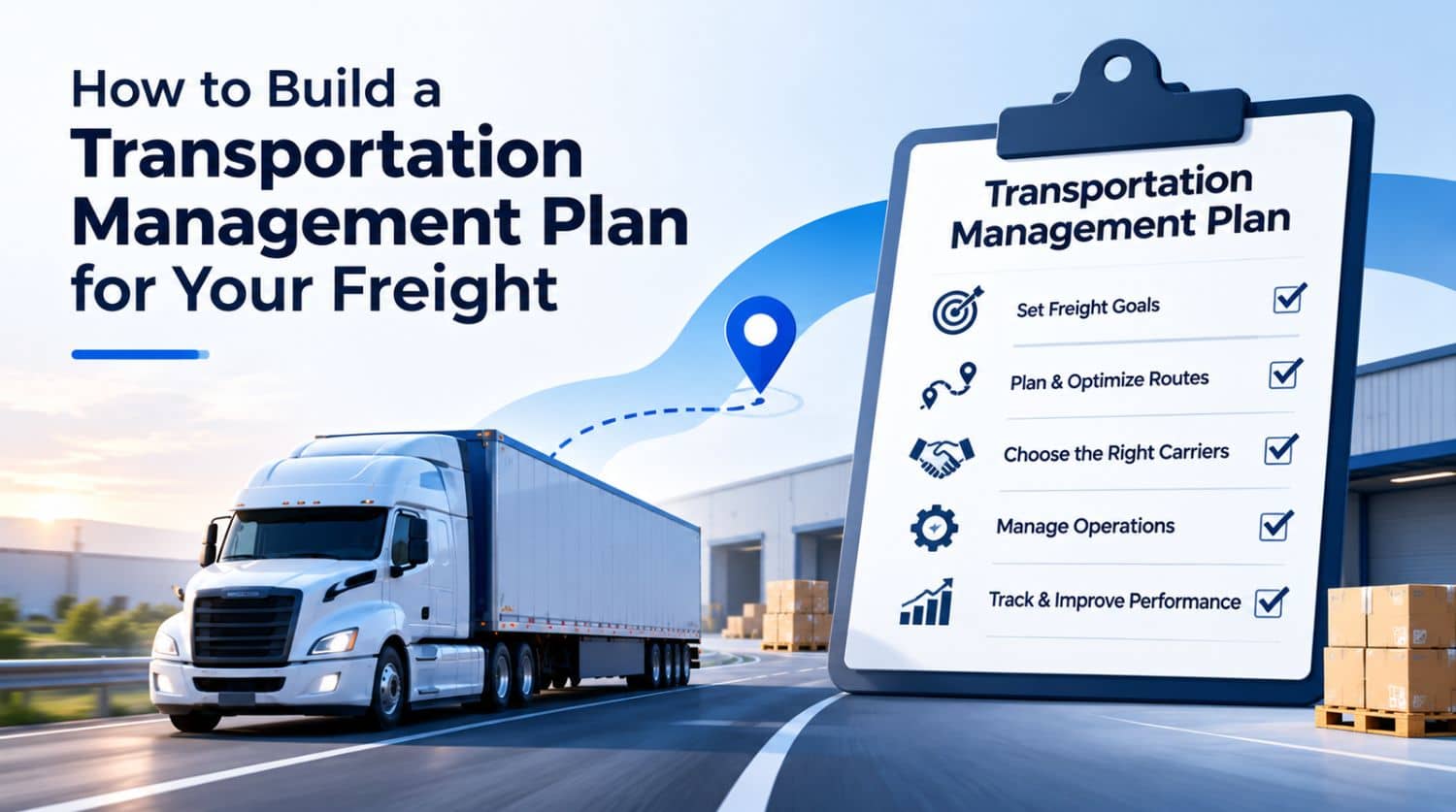
A Simple Transportation Management Plan Checklist
Use this as a quick reference when building or updating your own plan:
- ✅ Pull and review at least six months of shipping data
- ✅ Map your top lanes by volume and cost
- ✅ Set specific, measurable KPIs instead of vague goals
- ✅ Choose carriers and modes based on actual freight needs
- ✅ Keep backup carriers ready for high-volume lanes
- ✅ Build in real-time shipment visibility
- ✅ Write down a response plan for common risks
- ✅ Set a fixed review cadence and stick to it
Let Norfleet Transportation help coordinate your freight with solutions tailored to your shipment requirements, delivery timelines, and transportation needs.
Final Thought
A transportation management plan isn’t a document you write once and file away. It’s a working tool that should change as your freight, your volume, and your goals change. Start with the basics, measure what actually matters, and revisit the plan on a set schedule. That’s what separates a business reacting to freight problems from one staying ahead of them.
FAQs
What is a transportation management plan?
A transportation management plan is a documented strategy that covers carrier selection, freight modes, performance goals, and how a business tracks and responds to shipping issues.
How often should I update my transportation management plan?
Most businesses review and update their plan quarterly, though a monthly check-in on key metrics helps catch problems before they show up in the bigger quarterly review.
What KPIs should I track in a transportation management plan?
Track cost per shipment, on-time pickup and delivery rate, tender acceptance rate, dwell time, and accessorial charges as a share of total freight spend.
Do I need a transportation management system to build a plan?
Not necessarily. A smaller shipper can start with a documented plan and basic tracking tools, then add a full transportation management system as volume grows.
What’s the first step in building a transportation management plan?
The first step is reviewing your existing shipping data, since you need to understand your current lanes, costs, and performance before setting new goals.
How long does it take to build a full transportation management plan?
Most businesses can put together a basic plan in a few weeks, though refining KPIs and carrier relationships is an ongoing process that continues well past the initial build.